
Shona sculpture is collected internationally, but you can find this beautiful work right here in Minnesota. Walk into Mhiripiri Gallery in Bloomington, and you are standing among works from one of the most significant art movements to come out of Africa in the twentieth century. That is not a marketing line. It is a matter of documented art history and worth understanding because it changes how you see the stone in front of you.
A movement that began in the 1950s
The contemporary Zimbabwean stone sculpture movement, widely known as Shona sculpture, emerged in the 1950s around the National Gallery in what was then Salisbury, now Harare. Its first curator, Frank McEwen, had previously worked at the Musée Rodin in Paris and moved in the same circles as Picasso and Matisse. He recognized the talent of the artists he met and encouraged them to carve. Within a remarkably short time, the work these sculptors produced was being taken seriously by the international art world.
Shown at the Rodin, and at the Museum of Modern Art
In 1971, McEwen organized an exhibition of Zimbabwean stone sculpture at the Musée Rodin in Paris, the museum dedicated to the man widely considered the father of modern sculpture. The show is remembered as a turning point: it placed this work squarely within the serious assessment of the established art world, and many of the pieces were bought by collectors, some of whom still hold them.
The Rodin was not an isolated moment. Zimbabwean stone sculpture was also exhibited at the Museum of Modern Art in New York and at the Institute of Contemporary Arts in London during the same period. What hung in these spaces was not presented as anthropology or craft. It was shown as contemporary sculpture, standing alongside the tradition it now belonged to.
The recognition kept building. In 1987, Newsweek described the movement as the most important new art form to emerge from Africa this century. That phrase has followed the work ever since, and it is still how many in the field describe it.
The artists behind the work
Part of what gives this tradition its weight is the individual artists who defined it, several of whom are held in major museum collections around the world.
Henry Munyaradzi, known simply as Henry, is among the most recognized names in the movement. Born in Guruve in 1931, he began sculpting in 1967 in the Tengenenge community and developed a distinctive, pared-down style centered on iconic faces and forms. His work appears at international auctions and is held in the collection of the British Museum in London, the Indianapolis Museum of Art, and the National Gallery of Zimbabwe.
Bernard Matemera, also born in Guruve, spent his entire career at Tengenenge and became known for powerful, monumental figures and for the theme of metamorphosis, humans and animals merging in stone. His work was exhibited internationally, and in 1986 he received an Award of Honor at the Triennale in New Delhi.
These are two names among many. What they share is a place in documented history: internationally exhibited artists whose work is collected and studied, rather than decorative objects made for a tourist market.
To learn about more artists with work at Mhiripiri Gallery, check out our Artists Page
Why this history matters to a collector
It is easy to encounter a stone sculpture and read it as simply beautiful. It is beautiful. But knowing the history behind it changes the experience. You are not looking at a curiosity or a souvenir. You are looking at contemporary sculpture with more than half a century of documented exhibition history, a tradition that was validated in Paris and New York within twenty years of its emergence and has been collected seriously ever since.
That lineage is exactly what drew Rex Mhiripiri to this work. Over forty years, he traveled to Zimbabwe, built relationships with the artists, and brought their sculpture home to the Twin Cities because he understood what it was and where it stood in the history of modern art. He wanted Minnesota to know it too.
See it in person
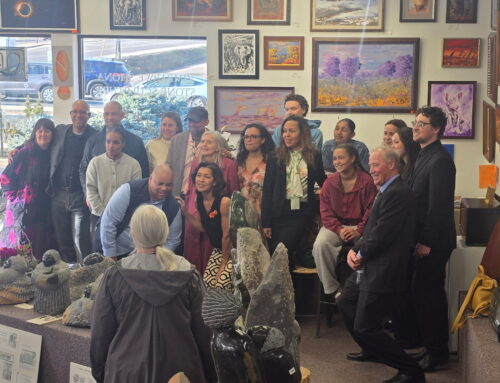
Photographs can show you color and form, but stone rewards being seen in person, where you can take in its scale, its polish, and the marks of the hand that shaped it. At Mhiripiri Gallery, you can stand among works from this tradition and see for yourself why it has held the attention of the art world for more than half a century.
Mhiripiri Gallery
9001 Penn Avenue South
Bloomington, Minnesota
[…] all the themes in Shona sculpture, few appear as often, or move people as immediately, as the mother and child. Spend time in the […]